macOS processes › Core system
What is fseventsd on Mac?
fseventsd records which folders change on your disks. Spotlight, Time Machine, Finder and sync apps like Dropbox use that record to know where to look, instead of scanning everything.
What it does
Whenever files are created, changed or deleted, fseventsd batches the changes and writes them to a hidden .fseventsd folder at the top of each disk. Apps can ask what changed since a certain point, even across restarts. Its own work is usually light; the heavy lifting happens in the apps reacting to the changes.
Why it gets busy
- Large numbers of file changes, like unzipping archives, installing apps, or a developer build or package install writing thousands of files.
- Sync apps and backups reading the change history.
- Connecting a drive with a long change history.
Why is fseventsd using so much CPU?
fseventsd is busy when lots of files are changing. It's a sign of other activity, like a big copy, install or build, and it settles when that work stops.
Is it safe to quit?
Apps that rely on it can miss changes and fall back to a full rescan, which costs more than it saves.
How to calm it down
- Let large copies, installs and builds finish. It calms down when files stop changing.
- Keep folders that change constantly, like build output or node_modules, out of iCloud Drive, Dropbox and similar synced folders.
- Exclude those folders from Spotlight in System Settings › Spotlight › Search Privacy…, and from Time Machine, so fewer services react to every change.
In SystemWatch
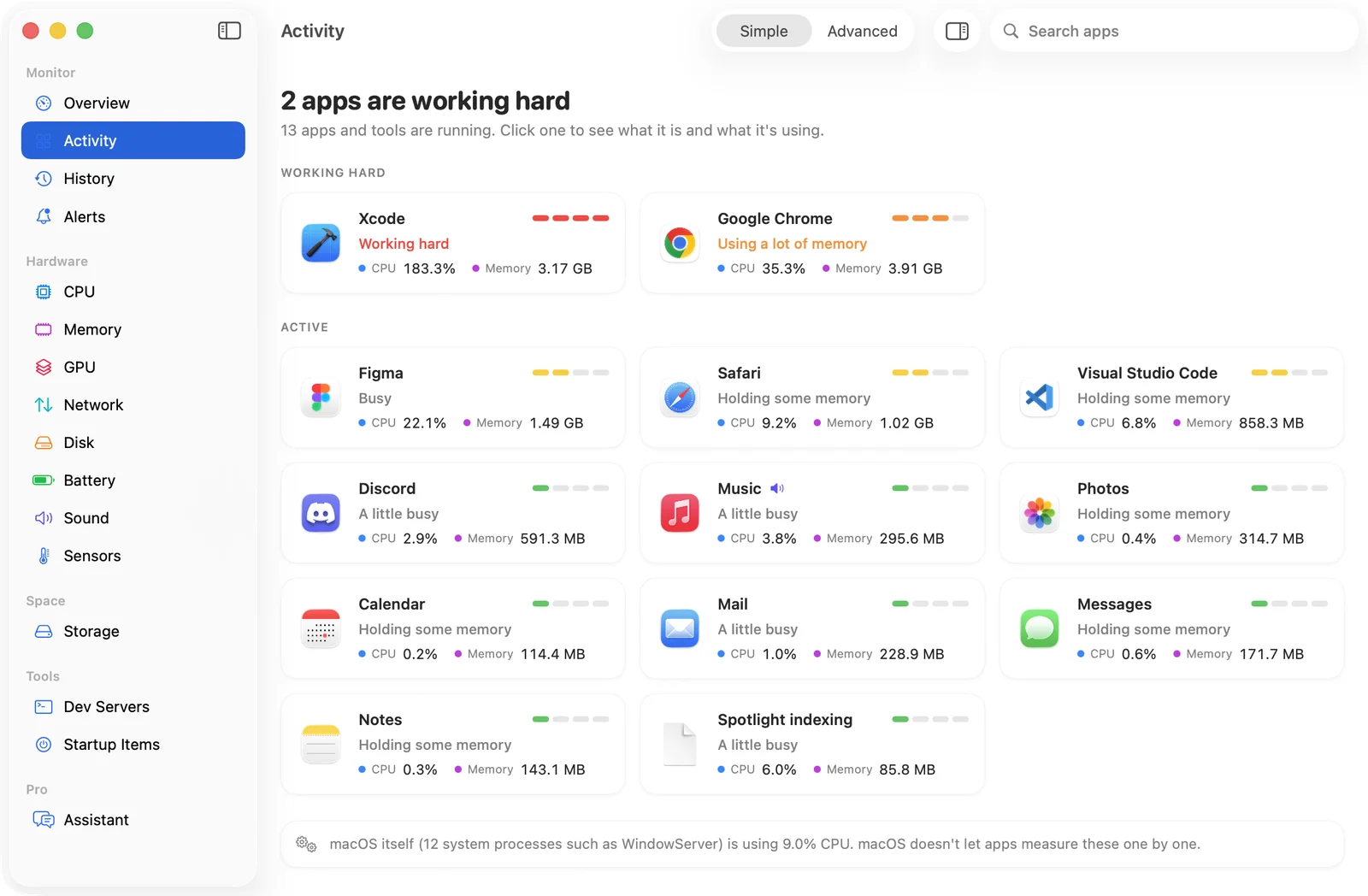
SystemWatch shows which other processes are busy at the same moment as fseventsd, so you can see whether a build, a sync app or a backup is behind it.