macOS processes › Spotlight and search
What is mds on Mac?
mds is the metadata server behind Spotlight. It coordinates the indexing of your files so Spotlight, Finder search and apps can find them quickly.
What it does
mds learns which files changed, decides what needs indexing, and hands the reading to mdworker_shared processes. The results go to mds_stores, which saves them in the index on each disk. You'll notice mds most after a macOS update, after copying lots of files, or when you connect a new drive.
Why it gets busy
- A macOS update, after which Spotlight often updates or rebuilds its index.
- Copying, downloading or unzipping large numbers of files.
- Connecting a new or large external drive, which gets indexed.
- Folders where thousands of files change often, like developer projects.
Why is mds using so much CPU?
mds uses CPU while Spotlight is indexing, which is normal after updates or big file changes. If it hasn't settled after a day or two, exclude busy folders or rebuild the index.
Is it safe to quit?
launchd restarts it right away, so quitting it only interrupts indexing, which then starts again.
The real mds runs from the Metadata framework inside /System/Library/Frameworks/CoreServices.framework.
How to calm it down
- Let it finish. Indexing after an update can take a few hours with the Mac awake and plugged in.
- Exclude folders and drives you never search in System Settings › Spotlight › Search Privacy… (on Sequoia, Siri & Spotlight › Spotlight Privacy…).
- Check that indexing is on for your startup disk with
mdutil -s /in Terminal. It only reports status and changes nothing.
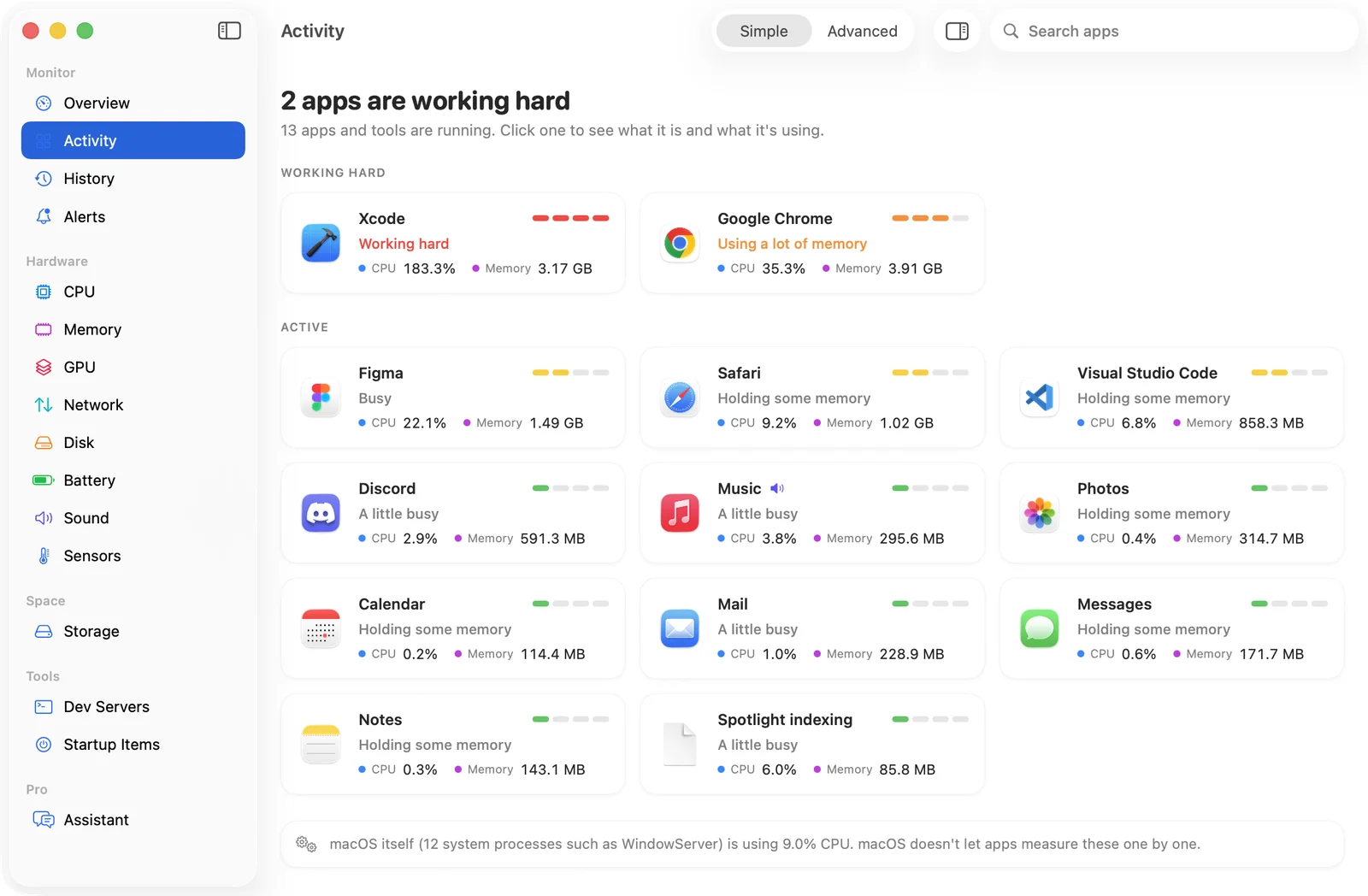
In SystemWatch
SystemWatch labels mds and its helper processes as Spotlight indexing, and History shows how long the indexing actually ran.