macOS processes › iCloud and sync
What is fileproviderd on Mac?
fileproviderd manages cloud storage files in Finder for iCloud Drive and for apps like Dropbox, Google Drive, OneDrive and Box that use Apple's File Provider system.
What it does
It keeps track of which cloud files are downloaded and which are placeholders, fetches files when you open them, and coordinates uploads with each provider's app. Cloud folders that appear in the Finder sidebar work through it, while the provider's own app handles the actual transfer to its servers.
Why it gets busy
- A cloud app syncing many files, or a first sync after setup.
- Browsing big cloud folders in Finder, which makes it list and update many items.
- Spotlight or a backup app reading cloud folders, which can trigger downloads.
- A provider app retrying a file that won't sync.
Why is fileproviderd using so much CPU?
fileproviderd works for every cloud storage app at once, so its CPU often reflects Dropbox, Google Drive, OneDrive or iCloud Drive syncing. Pause each provider in turn to find the busy one.
Is it safe to quit?
macOS restarts it and every cloud provider reconnects, which can make things busier for a while.
How to calm it down
- Pause syncing in the cloud app that's active (Dropbox, Google Drive, OneDrive) to see whether fileproviderd calms down.
- Mark large folders you don't need offline as online-only in that cloud app.
- Look for files with sync errors in the cloud app and fix or remove them.
- Update your cloud apps, since File Provider fixes often come from the provider.
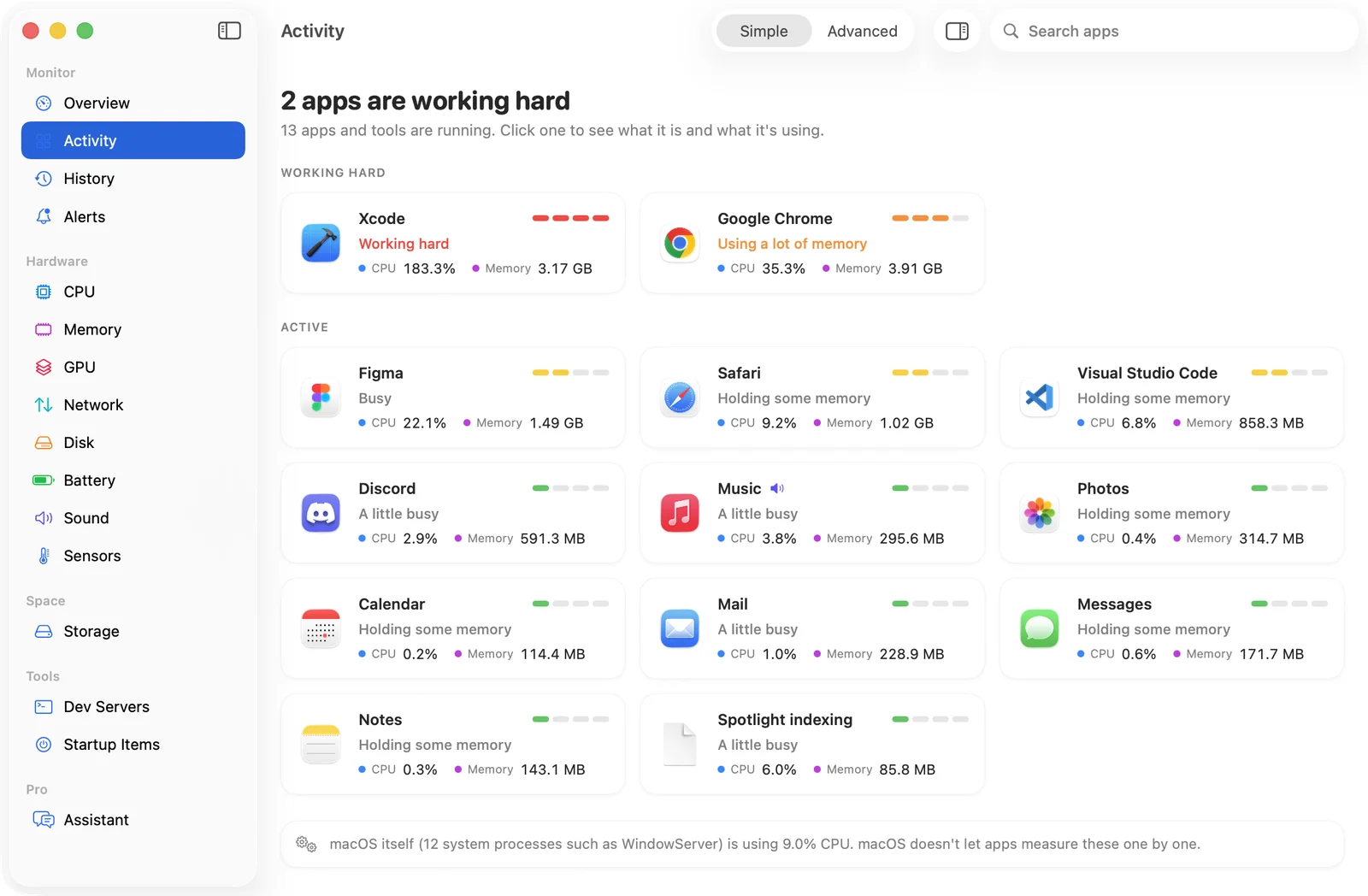
In SystemWatch
SystemWatch labels fileproviderd as Cloud files, and the website edition shows its open files, which reveals which provider's folder it's working in.