macOS processes › Networking and wireless
What is nsurlsessiond on Mac?
nsurlsessiond handles background downloads and uploads for apps and macOS. Apps hand it transfers so they can continue even when the app isn't open.
What it does
App Store downloads, podcast and music downloads, some iCloud transfers and app content updates can all run through nsurlsessiond. It decides when each transfer runs based on network, power and priority. Because many apps share it, the traffic Activity Monitor shows for it is usually other apps' work. You'll usually see two copies, one for the system and one for you.
Why it gets busy
- Large app or game downloads from the App Store.
- Podcasts, Music or TV downloading episodes or tracks.
- Apps uploading in the background, such as photo or backup apps.
- A queue of transfers that piled up while you were offline.
Why is nsurlsessiond using so much CPU?
nsurlsessiond is doing background transfers for other apps, often App Store, Podcasts or iCloud downloads. Its activity ends when the queue is done.
Is it safe to quit?
macOS restarts it. Transfers that were running may resume or start over later.
The genuine nsurlsessiond runs from /usr/libexec/nsurlsessiond.
How to calm it down
- Confirm it's moving data in Activity Monitor's Network tab, then check the App Store, Podcasts, Music and TV for downloads in progress.
- Turn off automatic downloads in apps where you don't need them, such as Podcasts.
- On a metered connection, turn on Low Data Mode for that network in System Settings › Wi-Fi › Details…, which asks apps to hold off on background transfers.
In SystemWatch
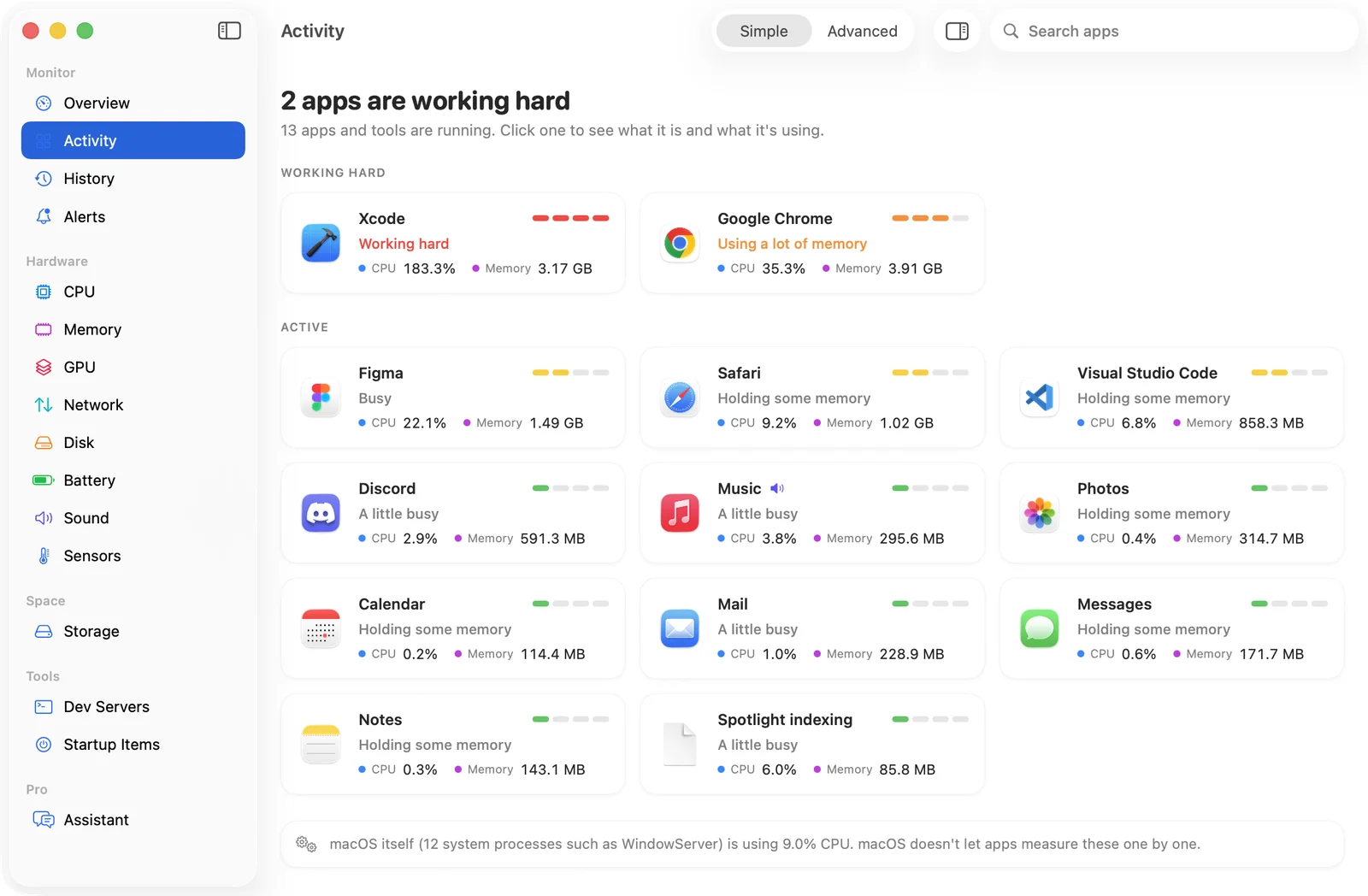
The website edition of SystemWatch shows nsurlsessiond's network connections, which helps you see which service it's downloading from.