macOS processes › Networking and wireless
What is rapportd on Mac?
rapportd lets your Mac communicate with your other Apple devices nearby, like an iPhone, iPad, Apple TV or HomePod. Continuity features and device-to-device services use it.
What it does
It finds devices signed in to the same Apple Account, or ones you've approved, on the same network or nearby, and sets up secure connections between them. Continuity features rely on it, and other system services, like biomesyncd, use it to reach your devices. That's why firewall apps sometimes ask whether rapportd may accept incoming connections.
Why it gets busy
- Several Apple devices nearby, all checking in.
- A device that keeps appearing and disappearing on the network.
- Syncing data with your devices after they reconnect.
Why is rapportd using so much CPU?
rapportd is busy when it's talking to your nearby Apple devices. Several devices, or one that keeps dropping off the network, keep it working.
Is it safe to quit?
macOS restarts it, and Continuity features reconnect a moment later.
The real rapportd is at /usr/libexec/rapportd. A firewall prompt about it is normal.
How to calm it down
- Allow rapportd in your firewall app if it asks. Blocking it can cause repeated retries.
- If you don't use Continuity features like Handoff, turn them off in System Settings › General › AirDrop & Handoff.
- Restart the Mac and your nearby devices if it stays busy.
In SystemWatch
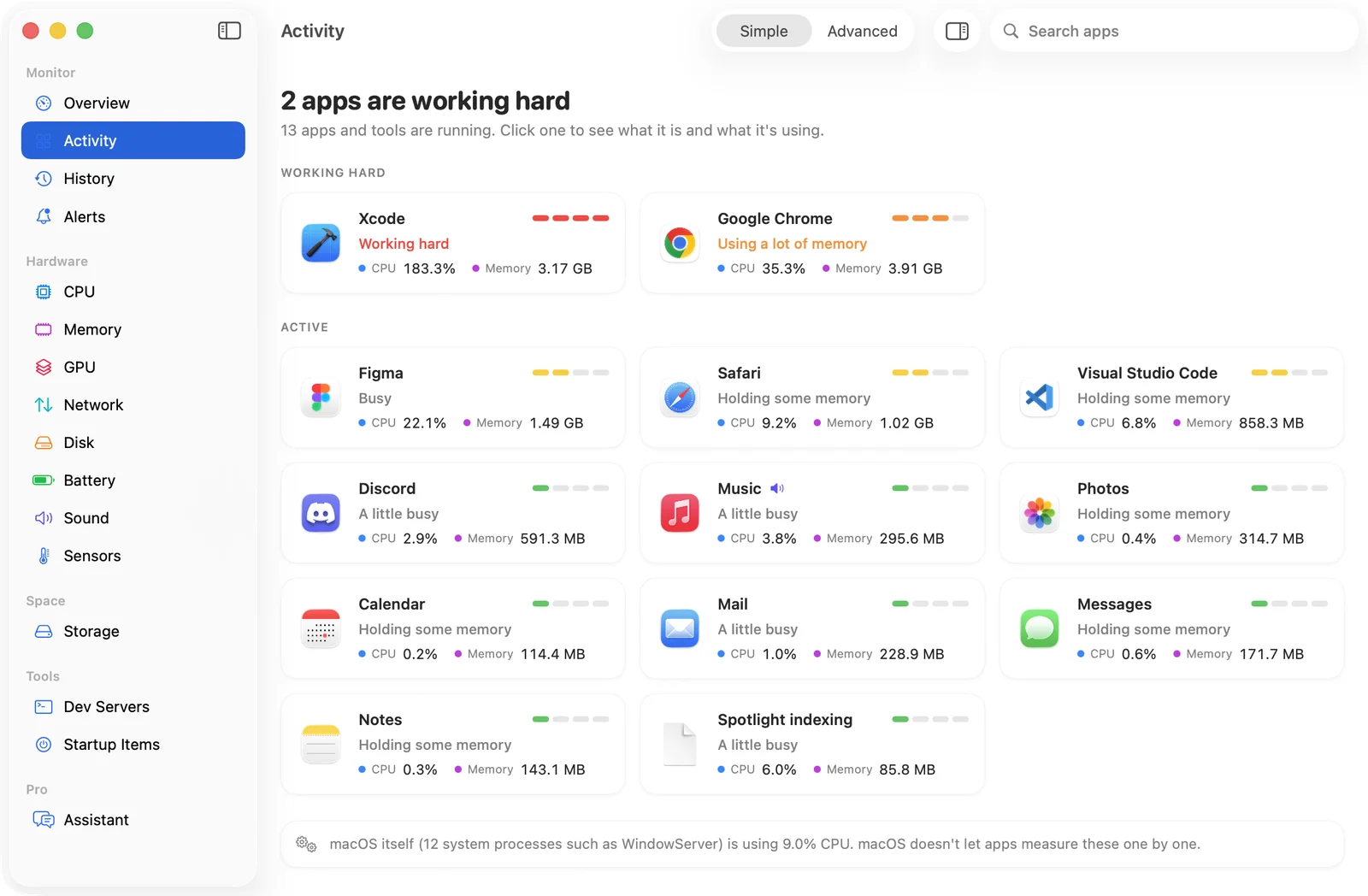
The website edition of SystemWatch shows rapportd's network connections, so you can see it's talking to your own devices on your network.