macOS processes › Power and performance
What is dasd on Mac?
dasd decides when background work runs on your Mac. It schedules tasks like backups, Spotlight indexing, Photos analysis and updates for times that suit your battery, temperature and usage.
What it does
Apps and system services register background tasks with conditions, like “only on power” or “needs a network”. dasd, the Duet Activity Scheduler, weighs those against the Mac's current state and lets each task run when it makes sense. It uses usage patterns from coreduetd to pick good times.
Why it gets busy
- Many tasks waiting at once, such as after waking or plugging in.
- Frequent changes in power or thermal state, which make it re-evaluate.
- An app registering background tasks very often.
Why is dasd using so much CPU?
dasd schedules background work. When it's busy, it's usually juggling lots of queued tasks after a wake or a power change, and letting those tasks run settles it.
Is it safe to quit?
macOS restarts it, and background maintenance like backups and indexing depends on it.
How to calm it down
- Plug in and leave the Mac idle for a while so queued tasks can run and finish.
- Look at which background tasks get busy right after dasd, like backups or indexing, and deal with those.
- Restart your Mac if dasd itself stays high.
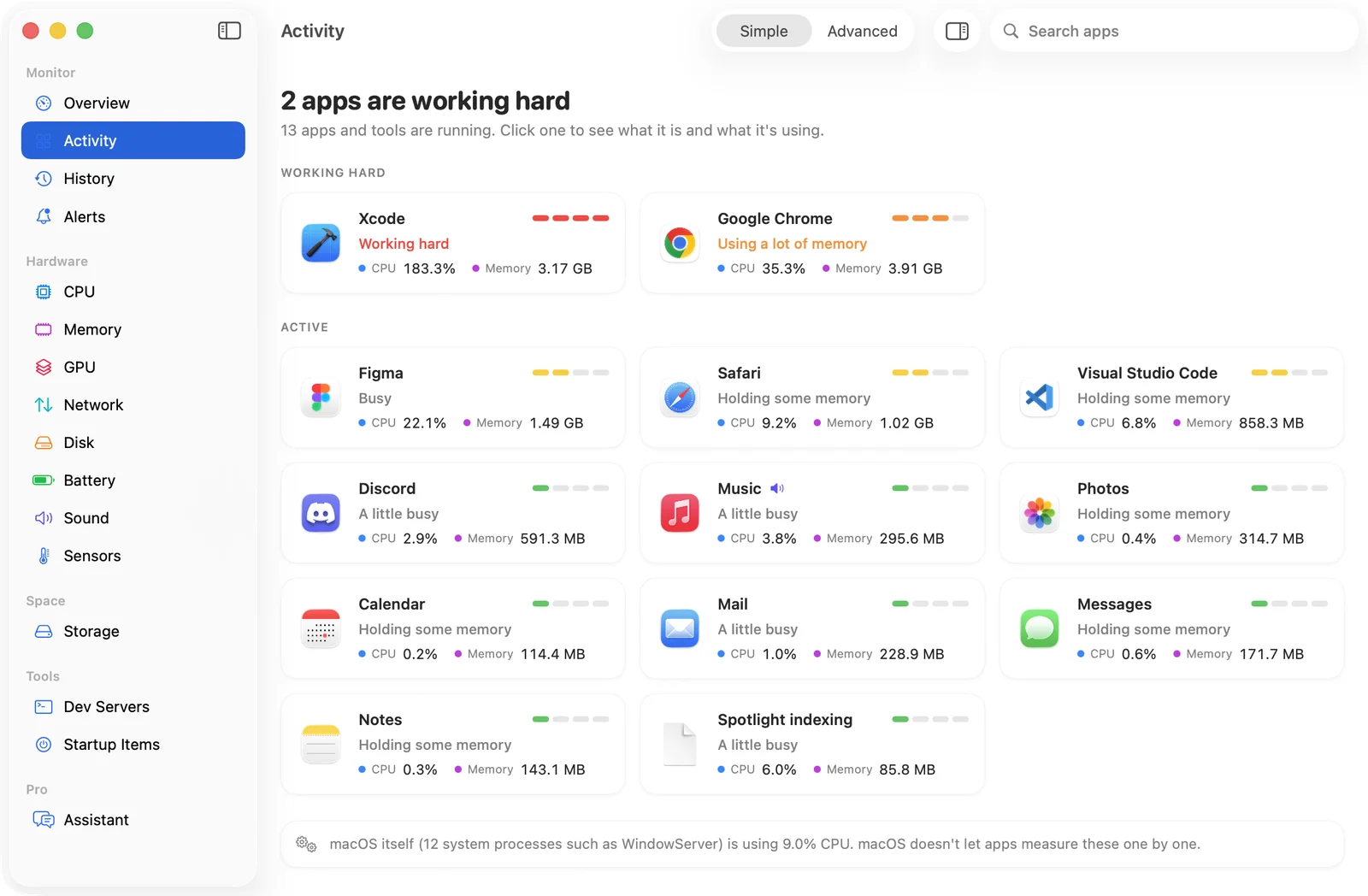
In SystemWatch
SystemWatch's History shows dasd alongside the tasks it schedules, so you can see which background job ran when it got busy.