macOS processes › Apple account and messaging
What is akd on Mac?
akd is the AuthKit daemon, which handles signing in to your Apple Account on your Mac. It manages authentication, two-factor codes, and the tokens apps use to stay signed in.
What it does
When iCloud, the App Store, Messages or another Apple service needs to confirm your account, akd does the sign-in and refreshes credentials in the background. It also shows the prompts that ask for your password or a verification code.
Why it gets busy
- An Apple Account prompt waiting for you, for example after a password change.
- Network problems reaching Apple's servers, so sign-in retries.
- Signing in on a new Mac or after a restore, when many services authenticate at once.
- A firewall or privacy tool blocking akd's connections.
Why is akd using so much CPU?
akd is usually busy because an Apple Account sign-in is pending or failing. Check for a prompt under your name in System Settings and complete it.
Is it safe to quit?
macOS restarts it right away. Apple services may ask you to sign in again.
Apple's akd lives in /System/Library/PrivateFrameworks/AuthKit.framework.
How to calm it down
- Open System Settings and look at your name at the top. If there's a badge or message, follow it to finish signing in.
- If you recently changed your Apple Account password, sign in again wherever macOS asks.
- Allow akd in firewall apps instead of blocking it.
In SystemWatch
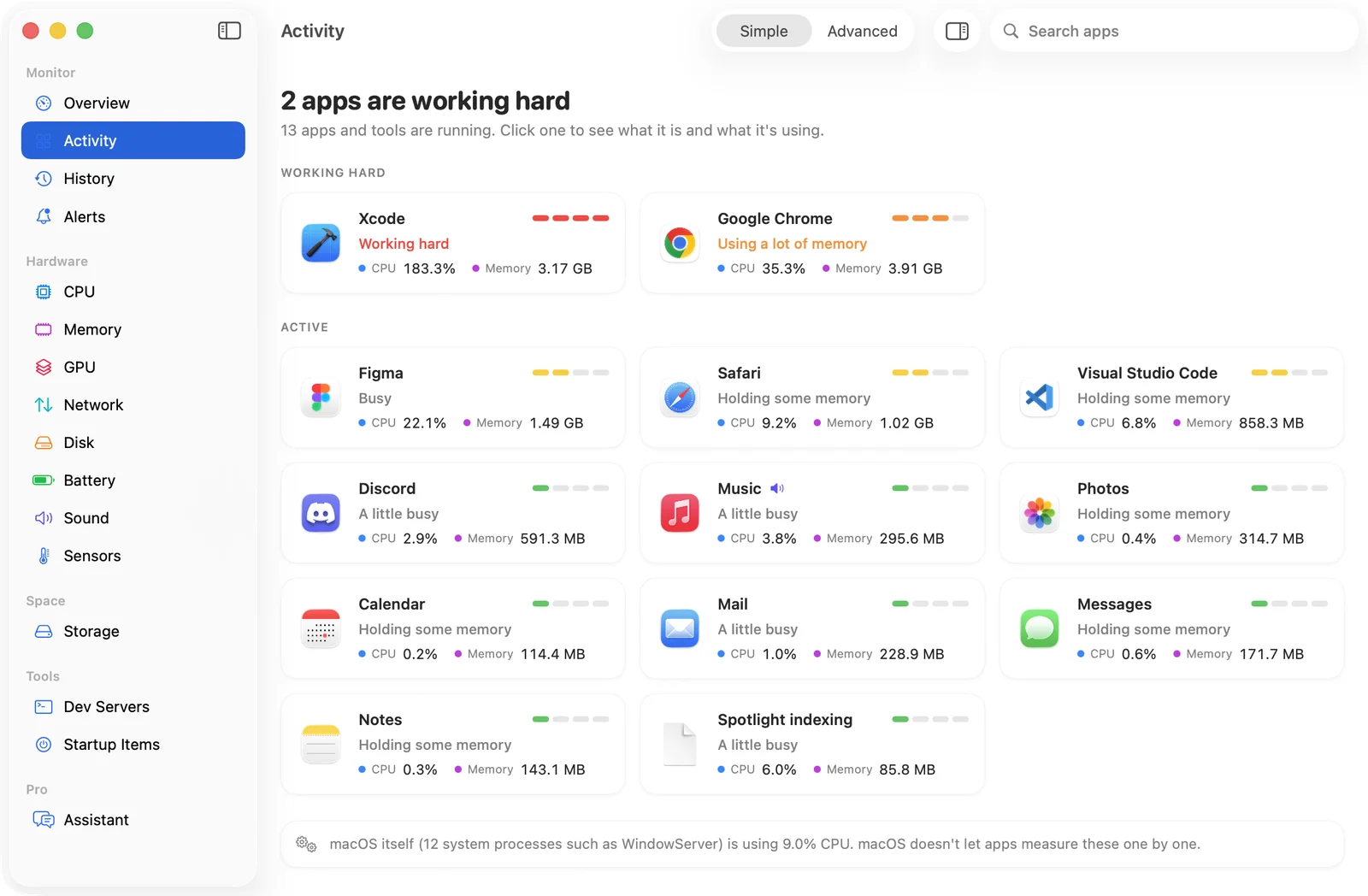
SystemWatch's History shows whether akd has been busy since a password change or restore, which tells you a sign-in is waiting.